THE RED-X: URSULA HONKING ON BOBO!

MNN. Sept. 23, 2026. Ursula von der Leyen is like a groupie who wants the best rock star and was apparently seen kissing Mark Carnage, the Prime Minister of onowarekeh Canada, behind a famous statue in Brussels [The Pissing Mannequin]. 

The Red-X just flew into the vast territory of the rotinoshonni, known as the “keepers of the eastern door” [to turtle island]. He flew into kanienkehaka in a clockwise direction from his western habitat where the sun never sets, so he says. He came to give his proctocological wisdom on the matter, the question being, “What does Mrs. Carney think about Mark playing the field?’

“Well, Ursula is a high paid social companion out of the white man’s camp whose target is now Mark Carney and his tie to Canada indigenous land. She will be honking on Bobo to get what she wants. The Red-X sees it as another nefarious European ploy to gain access to all of our natural wealth and once again threaten us, the original people. She’s going to try to honk all the wealth she can out of Canada for her masters. “Curse ya, Ursula! You’re getting nothing whether you honk on Bobo or not”.

The Red-X continues, “You and all those obsessive compulsive Europeans will get nothing! You have to approach the true and only sovereigns of Canada, the indigenous owners of great turtle island, who have everything to say about what happens to it and your nefarious schemes”.

“Curse ya, Ursula”. We heard about this latest romance you are running in Brussels. And also you have not asked the real sovereigns of great turtle island if you can help attack our long standing allies, the Russians, with whom we have peace treat relations long before the colony of Canada existed by 160 years. Canada’s attacks against Russia are wholly illegal. Ursula, you cannot bypass this agreement with us of 1710.

JUST FOREIGN TAKERS AT THE INDIGENOUS TABLE!!!

And The Red-X warns Mark the Carnage, “We did not send you to Europe to impress or fool around displaying our worldly possessions”. Yes, we know the EUnion has no more colonies to rape and have made onowarekeh Canada as its new colony. Ursula being sent by the EU bankers and the U.S. is highly paid. Some of her ex-victims chant, “Curse ya. Ursula. The Red-X asks,”Let ‘s see how this thing with Carney works out!”

The Red-X reminds Ursula that the “Honey Trap” she’s cooking up won’t work because of the medicine the indigenous kids gave Mark when he went to the Indian Residential School [death camp] in Fort Smith, Northwest Territories, that his father ran. Ursula heads a deadly fetish for the empire builders. Our medicine is called the TRUTH! 

Ursula, with your intelligence and your backing to play the ‘honey trap’ role, Mark Carney is out there playing it just like Dwight Yoakem, in “I’m a honky tonk man, …

“I’M A HONKY TONK MAN” BY DWIGHT YOAKEM –

MohawkNationNews.com

kahentinetha2@protonmail.com

box 991  kahnawake mohawk territory  J0L 1B0  canada

THE “CAROUSSEL” IS SPINNING OUT OF CONTROL!

MNN. Sep. 17, 2026. The Two Row Wampum and the original indigenous languages were meant to stop all the evil that was coming to great turtle island onowarekeke. The colonial banker, now the Prime Minister of Canada, Mark Carney, without our knowledge or permission, is offering his foreign followers, the settlers and the globalists, a unique experience. “Canada” Inc. comes from the Mohawk word “canadien” meaning ‘squatters’. The King of England owns the corporation known as ‘Canada’. Canada’s settler colonists vote for the Prime Minister of the colony to rule over them. His job is to run the day–to-day operations for the corporation owner and to increase growing dividends for the international shareholders. That is why the Prime Minister swears allegiance only to the King of England.

To remind the world, the Corporation of Canada in July 1, 1867 is registered with US Securities & Exchange Commission as #00002300.98; and US is registered in Columbia Organic Act of 1871 as UNITED STATES OF AMERICA TA #000109556.

Because Canada and United States are corporations they cannot be countries because of the MONTEVIDEO CONVENTION ON THE RIGHTS & DUTIES OF STATES, 26 DEC. 1933. The United States, Australia, Canada and New Zealand had to incorporate as they are not: [a] an aboriginal population; [b] their land is not aboriginal]; [c] Their culture is not traditional; and [d] their imported languages are not indigenous.   

The Plan: the corporation of the US now wants total ‘control’ of the corporation of Canada especially in all security matters through a private agreement with Canada that Canada must guarantee forever! No US adversary will ever have a base in Canada or make investments without US approval. NATO will provide deterence and defence. US will deter Russian and Chinese influence in Canada. US will increase military presence in Canada without transfer of Canadian sovereignty to the US. This agreement will strengthen US corporate sovereignty in the Arctic, North Atlantic and Europe and will be signed at the UN in New York City. 

Notes on Indigenous Participation: The Iroquois Confederacy, one of the original indigenous people of turtle island, are expected to hand over on behalf of all indigenous people on turtle island all sovereign authority over them to the US government to set up the ‘New World Order’. Only the Confederacy and original indigenous people, as stewards placed on onowarekeh turtle island by Creation, can divert this move.  We are connected to the earth forces which can stop the evil forces that have come upon us so we can instead bring peace, not war. All citizens will need to speak one of the indigenous languages of great turtle island and live by the kaianerekowa, great peace, the original constitution of onowarekeh. 

“YEAH! IT WILL ALWAYS BE OUR LAND”.

Like a tree planted into the ground and its nourishment comes from the ground, only Creation can divert the land, nature, resources, and even the natural people. We cannot be disconnected from the forces of our life and land.  Only we indigenous are the sovereigns of turtle island  which is how we maintain our power and duty to exist here. Those going against the original way will be ‘de-horned’. There can be no Confederacy or original indigenous people anywhere in the world without the presence of the original keepers of the land placed by creation. Our feet are the roots in the ground which cannot be yanked out by foreigners to disconnected us from our original homeland.  We must remain with our earth mother which is the original source of life of planet earth. 

Natural order always wins. It cannot be violated by unnatural order. Even AI-created fear will affect mostly those who have come from foreign lands where their original spirit lies. The spirit realm of the natural order will always win. 


 Melanie Martinez sings “Caroussel” about how everybody is on a dark toxic ride chasing something unreachable:

Round and round like a horse on a carousel, we go
Will I catch up to love? I can never tell, I know
Chasing after you is like a fairytale, but I
Feel like I’m glued on tight to this carousel
Come, come one, come all
You must be this tall
To ride this ride at the carnival
Oh, come, take my hand
And run through play land
So high, too high at the carnival
And it’s all fun and games
‘Til somebody falls in love
But you already bought a ticket
And there’s no turning back now
Round and round like a horse on a carousel, we go
Will I catch up to love? I can never tell, I know
Chasing after you is like a fairytale, but I
Feel like I’m glued on tight to this carousel
This horse is too slow
We’re always this close
Almost, almost, we’re a freakshow
Right, right when I’m near
It’s like you disappear
Where’d you go? Mister Houdini, you’re a freak show
And it’s all fun and games
‘Til somebody falls in love
But you already bought a ticket
And there’s no turning back now
Round and round like a horse on a carousel, we go
Will I catch up to love? I can never tell, I know
Chasing after you is like a fairytale, but I
Feel like I’m glued on tight to this carousel
Why did you steal my cotton candy heart?
You threw it in this damn coin slot
And now I’m stuck, I’m stuck
Riding, riding, riding
Round and round like a horse on a carousel, we go
Will I catch up to love? I can never tell, I know
Chasing after you is like a fairytale, but I
Feel like I’m glued on tight to this carousel

Melanie Martinez- Carousel (Lyrics)

MohawkNationNews.com

kahentinetha2@protonmail.com 

box 991  kahnawake  que. canada J0L 1B0

MELANIE MARTINEZ SINGS “CAROUSSEL”

AKWESASNE MOHAWKS OPPOSE US SENATE BILL 3475 TO CLAIM NYS

MNN. SEP. 7, 2026. U.S. SENATE BILL 3475 IS A PIECE OF LEGISLATION INTRODUCED IN THE 119TH CONGRESS TO AUTHORIZE, RATIFY, AND CONFIRM THE AGREEMENT OF SETTLEMENT AND COMPROMISE RATIFYING THE AKWESASNE MOHAWK LAND CLAIM IN NORTHERN NEW YORK STATE. 

Press Release Statement Opposing S.3475 Published July 28, 2026 Modified July 28, 2026

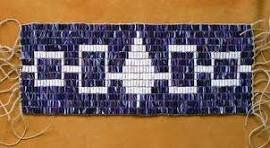
We are here today in the spirit of the Two Row Wampum, a concept that predates European settlement on this continent, but is the first treaty made by our ancestors with yours. We are not to interfere with one another’s affairs. Therefore our presence with you today is not to interfere with your affairs, it is to ensure that Bill S.3475 does not interfere with ours. We are here on behalf of Kanien’kehá:ka-Mohawk / Haudenosaunee Governance and Our Future Generations due to our responsibility for the land. Honourable Senators, representatives, officials, relatives, and all those gathered here today: We come before you with respect, humility, and a heavy responsibility; not as your constituents – as Kanien’kehá:ka-Mohawk Nation title holders of the Haudenosaunee Confederacy. We are here today to oppose the proposed Land Claim Settlement Agreement that would have adverse effects on our Indigenous system of governance, which predates the formation of both the U.S. and Canada. We speak today for the land, the water, the people, the women, the children, for the families, the hereditary leaders, the clans, the ancestors, and for the generations not yet born. We ask you to listen not only with your legal minds, but with your conscience. Because the matter before you is not only a bill before your legislature, this settlement would have long-reaching detrimental impacts.

S.3475 is about whether the United States Congress will help repair a historic injustice or whether it will make that injustice permanent. It is about whether Congress will respect the Mohawk people – the Kanien’kehá:ka as we say in our own language — as a living people with our own governance, laws, responsibilities, language, culture, and relationship to the land — or whether Congress will again treat us as a problem to be settled, divided, and erased. We are here to say clearly: S.3475 must be opposed. At minimum, it must be paused, and if it is ever to move forward, it must be substantially amended. No federal settlement should be passed that finalizes land status, governance issues, easements, rights-of-way, claims, or future rights without the full, free, prior, informed, and culturally legitimate consent of all affected Kanien’kehá:ka-Mohawk people and all affected Kanien’kehá:ka-Mohawk governance systems.

Our original way is for us all to have a voice – not giving one group authority over us all. We are not the Saint Regis Mohawk Tribe or Mohawk Council of Akwesasne. As titleholders in the Haudenosaunee Confederacy, we speak with an authority separate from the two organizations in Akwesasne that are currently party to this agreement. Those organizations were created by New York State and Canada. We speak for the Kanien’kehá:ka. Those organizations consist of Mohawk people from Akwesasne, but their organizations are part of Your Ways, not ours. They have once been referred to as ‘corporations’ by your courts. In the process of creating the “Agreement of Settlement and Compromise to Resolve the Akwesasne Mohawk Land Claim in the State of New York” consent of all governing bodies in Akwesasne and the community members that they represent has not been shown. The legitimacy of the agreement has not been proven, and without it, this bill is not reconciliation, it is not justice. It is erasure.

Recently, we have documented the support of over 1,000 people from five clans within Akwesasne to stop this agreement. That is more than all of the votes gathered in the Saint Regis Mohawk Tribal referendum conducted over a decade ago as their sign of support for this agreement. The process used to reach this settlement, as it stands, went against our traditional protocols by requiring secrecy on the part of participating officials. This kept participating Kanien’kehá:ka-Mohawk Haudenosaunee from bringing the terms of the agreement to their full clan membership and council in a timely manner.

The lands addressed in S.3475 are not ordinary lands. They are not simply parcels on a map. They are not merely property to be bought, sold, transferred, or extinguished. These lands are Kanien’kehá:ka-Mohawk lands. They are Haudenosaunee lands. They are part of the living territory of the Kanien’kehá:ka people. Our people have occupied and continue to occupy these lands. Our people continue to carry responsibility for these lands. The land is connected to our language, ceremonies, clans, families, governance, identity, our future. For the Kanien’kehá:ka-Mohawk people, land is not a commodity. Land is not just a legal asset. Land is not something separate from who we are. Our responsibilities to the land come from our original instructions. We belong to the land. The land does not simply belong to us. Since time immemorial, our people have carried the responsibility of protecting the land and water through ceremony – for us and for future generations; gratefully reaping, food, medicine, water. Our language and law are connected to our responsibility and stewardship of the land. That responsibility was not created by the United States or New York State. It was not created by a county, a town, or a corporation. And it cannot be erased by a settlement agreement. The United States. New York State, the counties and towns, have not fulfilled these responsibilities to the waters and land. The damage to our lands, waters, and people has been enormous. And it continues. It is not only damage from the past. It is ongoing. It is environmental, political, cultural, social and spiritual. It is related to efforts made to disrupt our original ways by reducing our lands and waterways to economic resources and reducing our people into categories that colonial governments can understand, control, and settle.

But we are not simply a category. We are not simply one federally recognized entity. We are not one side of a border. We are not a line item in a land claim. We are the Mohawk people -Kanien’kehá:ka. We are part of the Haudenosaunee Confederacy. We are a people with ancient responsibilities and inalienable rights. And our rights were never surrendered. Congress must understand this: The Kanien’kehá:ka-Mohawk people never ceded these lands. The women did not cede these lands, the hereditary leaders did not surrender their responsibilities. The clans did not extinguish their rights. The families did not consent to have their future negotiated away. No one has the right to take historic wrongdoing and try to legitimize it through federal legislation.

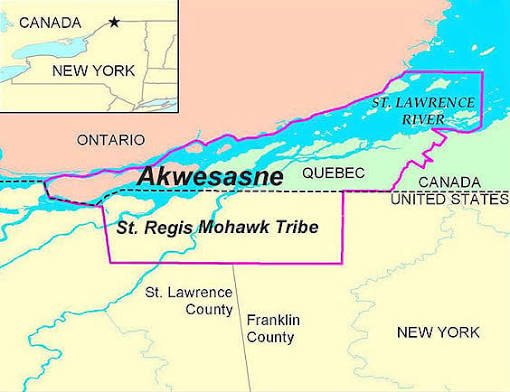
AKWESASNE ORIGINAL LAND TO BE RETURNED

TO MOHAWK KANIENKEHAKA ANCESTERAL LAND

IN NORTHERN NEW YORK STATE

The land claim itself exists because of unlawful land transactions. That matters. It matters because Congress should not now pass a bill that turns unlawful dispossession into lawful finality. It matters because a settlement should repair harm, not protect the results of harm. It matters because a government cannot first allow injustice, then later say: “Now that enough time has passed, we will call this settled.” That is not justice. That is not healing. That is not honour. That is not respect. That is the continuation of colonialism through legal language. Lands were taken without lawful consent. The answer cannot be to extinguish future claims. Rights were violated. The answer cannot be to force the people to accept a framework that leaves them divided, diminished, and silenced. Governance was disrupted. The answer cannot be to recognize only the structures that colonial law prefers while ignoring hereditary governance, women’s authority, clan responsibilities, and the voices of the people.

Congress must not use S.3475 to legalize the very dispossession that created the claim. This bill is presented as a settlement. But a settlement is only legitimate if the people with the rights have truly consented. A settlement is not legitimate simply because lawyers negotiate it. A settlement is not legitimate simply because governments sign it. A settlement is not legitimate simply because it is convenient for the State, the counties, the towns, or the power authority. A settlement is not legitimate if it excludes the people who carry the deepest responsibilities to the land. A settlement is not legitimate if it ignores the position of hereditary leaders whose priority is to protect governance processes and if it is rushed through Congress before the affected people understand its consequences. A settlement is not legitimate if it requires silence in exchange for recognition and extinguishes future claims while unresolved questions remain. A settlement is not legitimate if it divides us as a people and strengthens colonial jurisdiction while weakening Indigenous governance. A settlement is not legitimate if it punishes the people for what settlers and governments did, while rewarding settlers in perpetuity. The agreement requires payments to counties and land purchases, while the people continue to carry the burden of historic and ongoing damage to lands and waters. This is backward.

We, as the original people of this land were the ones who were harmed and we should not be made to pay for the consequences of dispossession. We are the original stewards of the lands that were taken and we should not be forced to purchase back what was never lawfully surrendered. The people whose waters were damaged should not be asked to accept agreements that do not guarantee true guardianship of the environment, and to accept another process that sidelines their own laws. A true settlement would restore. It would not punish. A true settlement would protect. It would not extinguish. A true settlement would strengthen Kanien’kehá:ka-Mohawk governance. It would not bypass it. A true settlement will honour the land. It will not treat land as a bargaining chip.

One of the most serious dangers of S.3475 is political erasure. This bill risks federal ratification of one political arrangement while marginalizing other legitimate Kanien’kehá:ka-Mohawk governance authorities, traditional leadership structures, clans, families, women, and affected rights holders. This is not a small concern. This is the heart of the issue. Congress must not pass legislation that resolves Indigenous land claims by recognizing only selected institutional voices while silencing or diminishing other legitimate governance systems. When Congress recognizes only the institutions created or preferred by colonial law, it does more than pass a bill. It reshapes Indigenous reality, deciding who counts. It decides who is heard and whose law matters. It decides whose consent is required and whose history is remembered. And it decides whose future is protected. That is why S.3475 cannot be treated as a simple administrative bill. On paper, it may look like settlement language. On paper, it may look like land transfers, easements, rights-of-way, jurisdiction, and compensation. But in practice, it threatens political erasure. It threatens to erase the authority of hereditary governance. It threatens to erase the responsibilities of women. It threatens to erase the voice of clans and families. It threatens to erase the fact that the Kanien’kehá:ka-Mohawk people are not confined by the U.S.-Canada border. And once Congress gives that erasure federal force, it will be very difficult to undo. Do not rush. Do not assume. Do not rely only on signatures from selected entities. Do not mistake federal recognition for full Kanien’kehá:ka-Mohawk consent. Do not mistake administrative convenience for justice, silence for agreement, or exclusion for settlement.

We also ask Congress to understand our role as hereditary leadership. As hereditary chiefs we are not simply political figures. We are not temporary office holders. We are not people who serve only for an election cycle. We are life-long leaders with responsibilities that come from our own governance systems. Our priority is not personal power. Our priority is the protection of the people, the continuance of our governance process, and to ensure that decisions affecting land, law, identity, and future generations are made in the proper way.

Many of our leaders are second-language English speakers. That must be respected. English legal language can be misleading, technical, and foreign to our way of thinking and speaking, just as the details of an agreement in our Kanien’kehá:ka language would be lost to English speakers. Do not mistake plain speech for lack of knowledge, careful silence for weakness or cultural protocol for delay. Do not mistake second-language English for lack of insight or deep understanding. As leaders we carry knowledge that cannot be measured by legal vocabulary. We carry memory, the weight of our ancestors, the voices of families, the law of the people and the instructions to protect the land. If Congress truly respects Indigenous governance, then it must respect the time, language, process, and authority of Indigenous governance. That means pausing S.3475 until the proper Kanien’kehá:ka-Mohawk and Haudenosaunee processes have taken place.

That means allowing hereditary leaders, women, clans, families, and community members to review the full consequences of this bill, ensuring that information is explained clearly, in accessible language, and through culturally legitimate processes with no pressure, no rush, no coercion, no artificial deadline and no final extinguishment. The principle is simple: Nothing about us, without us. Nothing about our land without our land-based governance. Nothing about our future without our people. Nothing about our rights without our consent. The United Nations Declaration on the Rights of indigenous Peoples recognizes that indigenous peoples have the right to maintain distinct political, legal, economic, social, and cultural institutions, and that states should consult and cooperate in good faith with Indigenous peoples through their own representative institutions to obtain free, prior, and informed consent before adopting measures that affect them.

S.3475 affects land. It affects our ability to fulfill our responsibilities to the lands and waters. It affects easements, rights-of-way, claims, governance, the environment, future generations and the relationship between the Kanien’kehá:ka-Mohawk people and our homelands. Congress should not advance this bill because not all affected Kanien’kehá:ka-Mohawk governance systems and rights holders were fully consulted or gave consent through their own legitimate processes. A significant number of stakeholders were informed after the fact and simply invited into a process already designed by others and asked to comment on a conclusion already reached. Consultation must be meaningful. Consent must be free. Consent must be prior, it must be informed, collective, and culturally legitimate. Consent is not currently present, therefore the bill must not proceed. We also raise the role of women as guardians of the land supported and represented by our men. In Haudenosaunee governance, land is not separated from women’s responsibilities; women carry inherent responsibilities for the land, life, and to future generations. The women did not cede these lands, did not surrender these responsibilities, and did not consent to the extinguishment of those responsibilities. That must matter to Congress.

If Congress passes S.3475 without respecting women’s land authority, then Congress is not simply passing a land bill. It is overriding Haudenosaunee law. It is saying that colonial signatures matter more than Indigenous women’s responsibilities. It is saying that federal process matters more than the people’s own law. That cannot be reconciliation. That cannot be respect. That cannot be justice. A settlement that treats land as property while ignoring its connection to life, ceremony, and future generations is not legitimate. Congress must not participate in that erasure. Akwesasne is also not confined by the border created by the United States and Canada. Akwesasne exists across what are now called New York, Ontario, and Quebec. Our families cross that border. Our history, our language, our ceremonies, our governance, and our identity cross that border. The border did not create us. The border divided us. S.3475 risks deepening that division by treating Akwesasne through U.S. administrative categories —federal, state, county, town, reservation, settlement area, non-settlement area. The documents warn that S.3475 may divide Kanien’kehá:ka-Mohawks by colonial categories such as U.S. side and Canadian side, elected and traditional, state and federal, county and town. Those are not our original categories. Those are imposed structures. They are not the source of our identity, nor the source of our law or of our relationship to the land.

Congress should not impose a domestic U.S. settlement framework on a people whose territory, kinship, culture, and governance predate and transcend the U.S.–Canada border. Kanien’kehá:ka-Mohawk governance cannot be reduced to whichever institution is most convenient for Congress to recognize. Akwesasne must be respected as a whole people. Not divided and not made smaller to fit the paperwork of colonial governments.

We also speak today from treaty relationships. Our people are heirs to the Two Row Wampum. We are also connected to the continuing reality reflected in the Jay Treaty, because our people predate and transcend the international border. These are not just historical references. They are living relationships. Under the Two Row Wampum, our nations were to travel side by side, neither attempting to steer the vessel of the other. S.3475 violates that principle if the United States uses its legislative process to steer, define, divide, or extinguish Kanien’kehá:ka-Mohawk land responsibilities. S.3475 violates that principle if Congress finalizes land claims over the objection of affected Kanien’kehá:ka-Mohawk people. Treaty relationship requires honour, patience, truth, it requires listening and it requires that the United States not use its power to finalize what the Kanien’kehá:ka-Mohawk people have not consented to. We are not here only to say no. We halted our participation in this settlement process because it was not in keeping with our processes and would cause great harm to our people. We reserve our right to continue to have a voice in these matters. We are here to say what justice requires, and it requires full disclosure, full community review, proper translation and explanation, time for hereditary governance processes, the participation of women, clans and families. Justice requires environmental guardianship, cross-border recognition, and that no court case or claim be accepted or discontinued in a way that adversely affects our rights. Justice requires that any discontinuance not be used to prevent the Kanien’kehá:ka Mohawk people from continuing to defend lands in our traditional homelands. Justice requires that Congress not ratify any agreement that forces the people to surrender unresolved claims before the people themselves have freely agreed.

Justice requires that the United States not rely on the unratified 2014 MOU, or any agreement, to forever extinguish Mohawk land claims. Justice also requires that land, air, and water(s) be protected, for our future generations and the animals and wildlife that depend on them for survival. Justice requires true guardianship, not merely control. Justice requires restoration, not erasure. We must also speak about compassion. Because beneath all the legal words, there is pain. There is pain in watching land being taken, in seeing water harmed, families divided by borders, governance systems being ignored, women’s authority being dismissed, and elders not being heard.

Then, there is the pain of leaders having to explain ancient responsibilities in a second language, inside foreign legal systems, the pain of being told, again and again, that someone else has the authority to decide our future, being asked to accept less than what was taken, being told that if we do not agree quickly, we are standing in the way of progress. We are not standing in the way of progress. We are standing in the way of erasure. We are standing in the way of another injustice being called a settlement and of our children inheriting silence. We are standing in the way of a law that could make it harder for future generations to protect what our ancestors protected for us. We do this because we love our people, we respect our leaders, we honour our women. We remember our ancestors, because we in turn are responsible to those not yet born.

To the United States Senate, we say: You have a choice. You can move this bill forward quickly and call it settlement. Or you can pause and ask whether settlement without full consent is really justice. You can rely on selected signatures and call it agreement. Or you can ask whether all affected Kanien’keháka-Mohawk governance systems and people have truly consented. You can treat this as a land transaction. Or you can recognize that this is about cultural survival. You can treat our leaders as obstacles. Or you can recognize us as lawful carriers of governance responsibilities. You can treat women’s land authority as symbolic. Or you can recognize that without women’s consent, the settlement lacks legitimacy. You can treat Akwesasne as divided by borders. Or you can recognize Akwesasne as one people whose identity predates those borders. You can finalize dispossession. Or you can help create a path toward honourable repair.

We ask you to choose honour, caution, and respect for indigenous people’s responsibility for the land over the convenience of paperwork. We ask you to oppose, pause, or substantially amend S.3475. Let us be clear about what we are saying. We are saying Congress should not ratify any settlement that extinguishes Kanien’kehá:ka-Mohawk rights. Do not validate one political arrangement in a way that erases hereditary governance, women’s authority, clan responsibility, families’ and individuals’ inalienable rights.

Do not transform unlawful historical land transactions into permanent federal acceptance.

Do not deepen the divisions imposed on Akwesasne by colonial borders and administrative categories.

Do not force the people to pay for the wrongdoing done to them.

Do not mistake a settlement with selected governments for the consent of the Kanien’keháka-Mohawk people as a whole.

Act with restraint, integrity, and humanity. This is not a rejection of peace. It is a demand for a just peace.

This is not a rejection of resolution. It is a demand for a legitimate resolution. T

his is not a rejection of dialogue. It is a demand that dialogue happen in the proper way, with the proper people, through the proper processes.

This is not a rejection of law. It is a demand that Congress respect our law too. Because our law did not disappear. Our governance did not disappear. Our relationship to the land did not disappear. Our women’s responsibilities did not disappear. Our treaty relationships did not disappear. Our people did not disappear. And we will not allow a federal bill to marginalize us in our own homelands.

Formal Notice to Colonial Governments and Related Entities On Behalf of the People of the Longhouse in Akwesasne.

To: The Government of the United States of America, the State of New York, the Government of Canada, the St. Regis Tribe, the Akwesasne Mohawk Council, and all pertinent legislative bodies and agencies.

Re: United States Senate Hearing in Washington. D.C. on Bill S.3475 – Resolution of the Akwesasne Mohawk Land Claim Subject: Assertion of Kanien’kehá:ka/Mohawk Title and Rejection of Colonial Claims. Please be formally advised that the lands central to the current litigation are, and remain, the territory of the Kanien’kehá:ka/Mohawk Nation as part of the Haudenosaunee Confederacy.

The Mohawk People repeatedly and relentlessly reject reliance on the 1776 Seven Nations of Canada Treaty or any similar colonial instruments as a valid basis for external claims. The Kanien’kehá:ka/Mohawk Nation has maintained continuous use, stewardship, and occupation of these lands, and the women never ceded nor surrendered title to New York State or any other colonial government. The classification of Akwesasne as a federal “reservation” does not diminish its status as Kanien’kehá:ka/Mohawk land in the eyes of its people.

On 02/07/2025, legal counsel for the MNCC, submitted a motion for dismissal without prejudice of the Nation’s participation in this matter. The Mohawk Nation initially engaged in the litigation process to keep a watchful eye on the colonial imposed government to not sell away our homelands. No Chief was ever given authority to sign. The Court formally granted the motion and recorded the Nation’s dismissal without prejudice.

It is further declared that neither the St. Regis Tribe nor the Akwesasne Mohawk Council-entities created under the auspices of U.S. and Canadian laws —possess the authority to extinguish or transfer title to Mohawk Homelands. This authority lies solely with the People of the Longhouse, who act in accordance with their traditional governance and protocols.

This notice is issued to safeguard the rights, governance structures, and protocols of the People of the Longhouse, and to demand that all references within New York State legislation implying ratification or consent by the Mohawk Nation Council of Chiefs be immediately removed. Any suggestion of such agreement is unfounded and must be stricken from all related legislative instruments. For the record, this notice is made without prejudice of the Mohawk Nation’s right to assert its land rights now or in the future.

The Mohawk Nation predates all colonial-imposed systems, and any withdrawal from negotiations or engagement should not be interpreted as surrender.

Sent from Akwesasne

Posted by MOHAWKNATIONNEWS.COM

box  991  kahnawake que.  canada J0L 1B0